Building Enterprise Apps for Complex Workflows
COMPANY
One Data
ROLE
Product Designer
PLATFORM
Browser App
YEAR
2019 - 2020
Building Enterprise Apps for Complex Workflows
COMPANY
One Data
ROLE
Product Designer
PLATFORM
Browser-based SaaS
YEAR
2019 - 2020
Building Enterprise Apps for Complex Workflows
COMPANY
One Data
ROLE
Product Designer
PLATFORM
Browser App
YEAR
2019 - 2020
Projects description
At One Data I designed data applications on top of the company's core SaaS platform. The brief was always the same: take a process that someone was doing in Excel or a mix of manual tools, and turn it into something structured, reliable, and fast. I worked across three different industries — logistics, life sciences, and retail analytics. Each one had different users, different stakes, and different definitions of what working software meant. Client names are under NDA. What I can share is the process and the outcomes.


My role
I was the UX designer in a cross-functional team of PMs, data scientists, and developers. I took complex operational workflows and translated them into usable interfaces. I ran user research, built wireframes and prototypes, tested with real users, and worked closely with developers during build. I also contributed to the shared design system used across all platform apps.
App 1: Logistics Planning Tool
The Problem
Logistics managers were making route and bundling decisions with no visibility. Everything happened in spreadsheets. They could not see shipment flows, spot bottlenecks, or test optimisation scenarios before committing resources.
What I designed
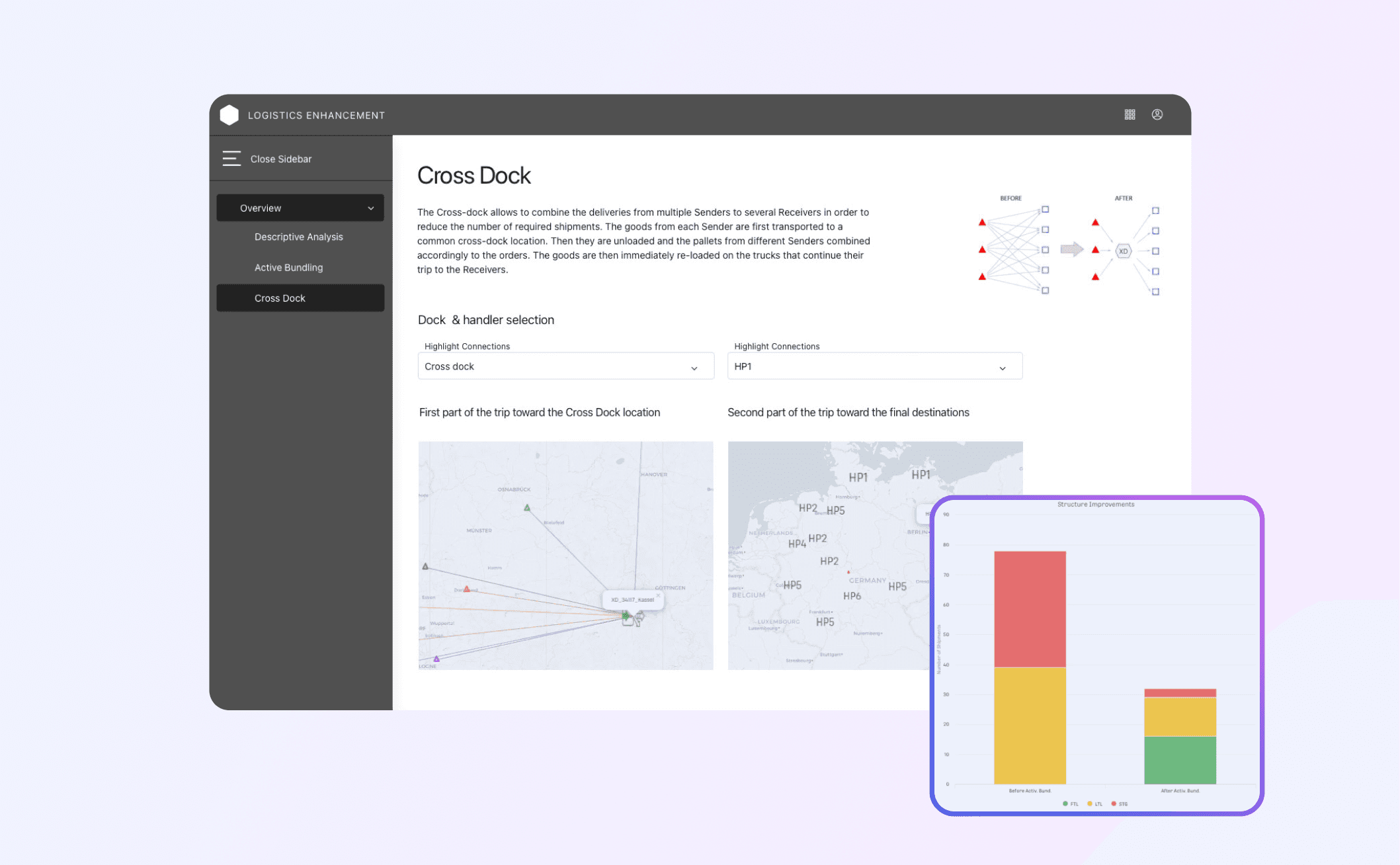
Three connected features. A shipment overview with maps and heatmaps so managers could see volume and problem areas at a glance. An active bundling tool that grouped smaller shipments into larger, more efficient loads. And a cross-dock optimiser that consolidated routes at a central hub before dispatch.
The biggest design challenge was making these tools usable for logistics managers who were not data analysts. Every screen went through multiple rounds of feedback with actual users before we built anything.
Three connected features. A shipment overview with maps and heatmaps so managers could see volume and problem areas at a glance. An active bundling tool that grouped smaller shipments into larger, more efficient loads. And a cross-dock optimiser that consolidated routes at a central hub before dispatch.
The biggest design challenge was making these tools usable for logistics managers who were not data analysts. Every screen went through multiple rounds of feedback with actual users before we built anything.
Results
Truck usage reduced by 16%. Managers had visibility they never had before and could make faster, more confident planning decisions.


App 2: Sample Data Management for Life Sciences
The Problem
Lab teams were tracking biological samples manually. Errors were common, traceability was almost impossible, and collaboration between teams working on the same runs was painful.
What I designed
I started by mapping six core user stories covering patient management, sample tracking, and run management, along with validation scenarios and error handling. This became the design foundation so nothing was guesswork.
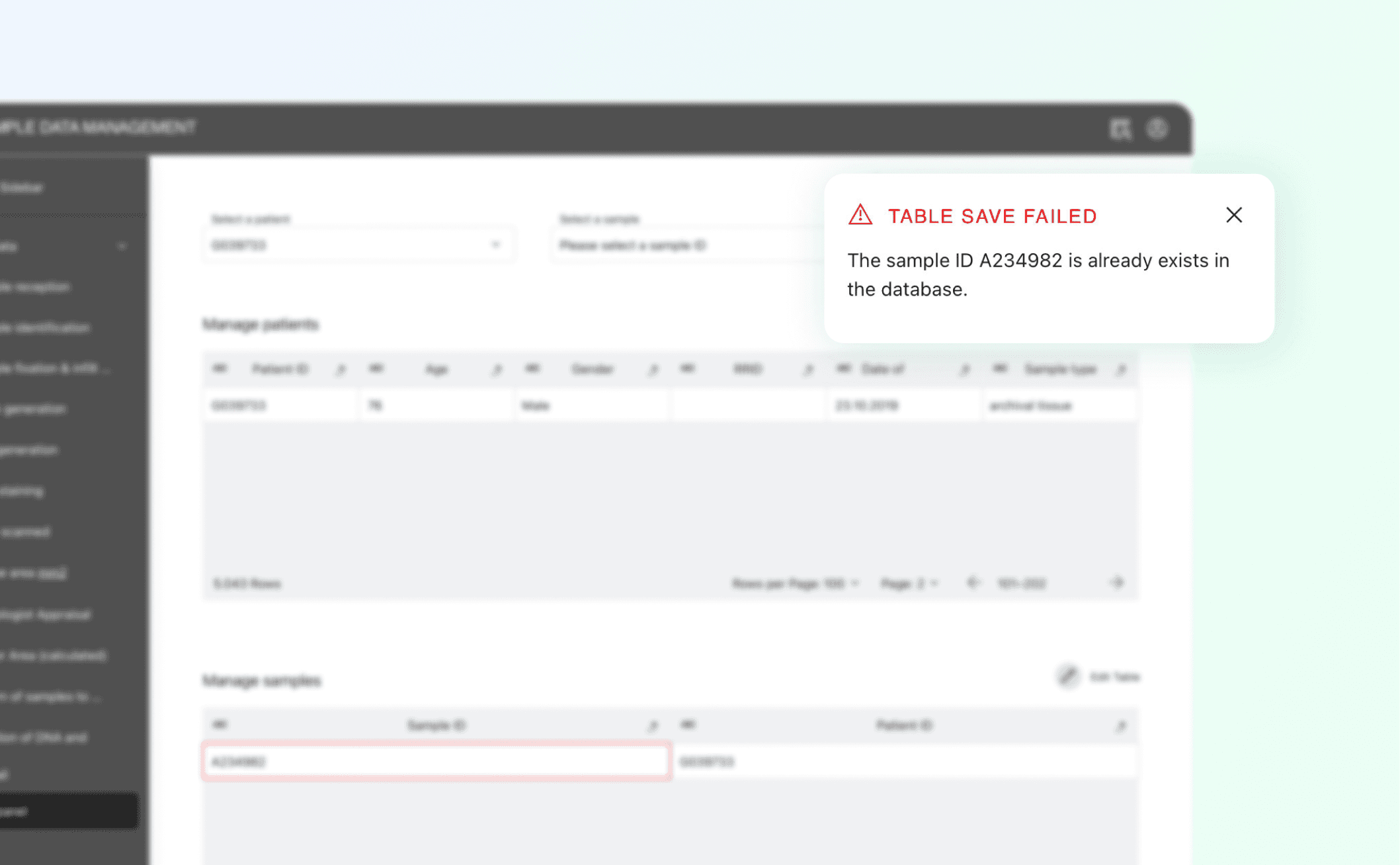
The app let lab operators track samples through a structured digital flow with built-in validation and a full audit trail. Errors got caught at entry, not discovered later when they were expensive to fix.
I started by mapping six core user stories covering patient management, sample tracking, and run management, along with validation scenarios and error handling. This became the design foundation so nothing was guesswork.
The app let lab operators track samples through a structured digital flow with built-in validation and a full audit trail. Errors got caught at entry, not discovered later when they were expensive to fix.
Results
Fewer manual errors, stronger traceability, and a workflow that matched how scientists actually worked rather than forcing them to adapt to software.


App 3: Data Processing Library for Retail Analytics
The Problem
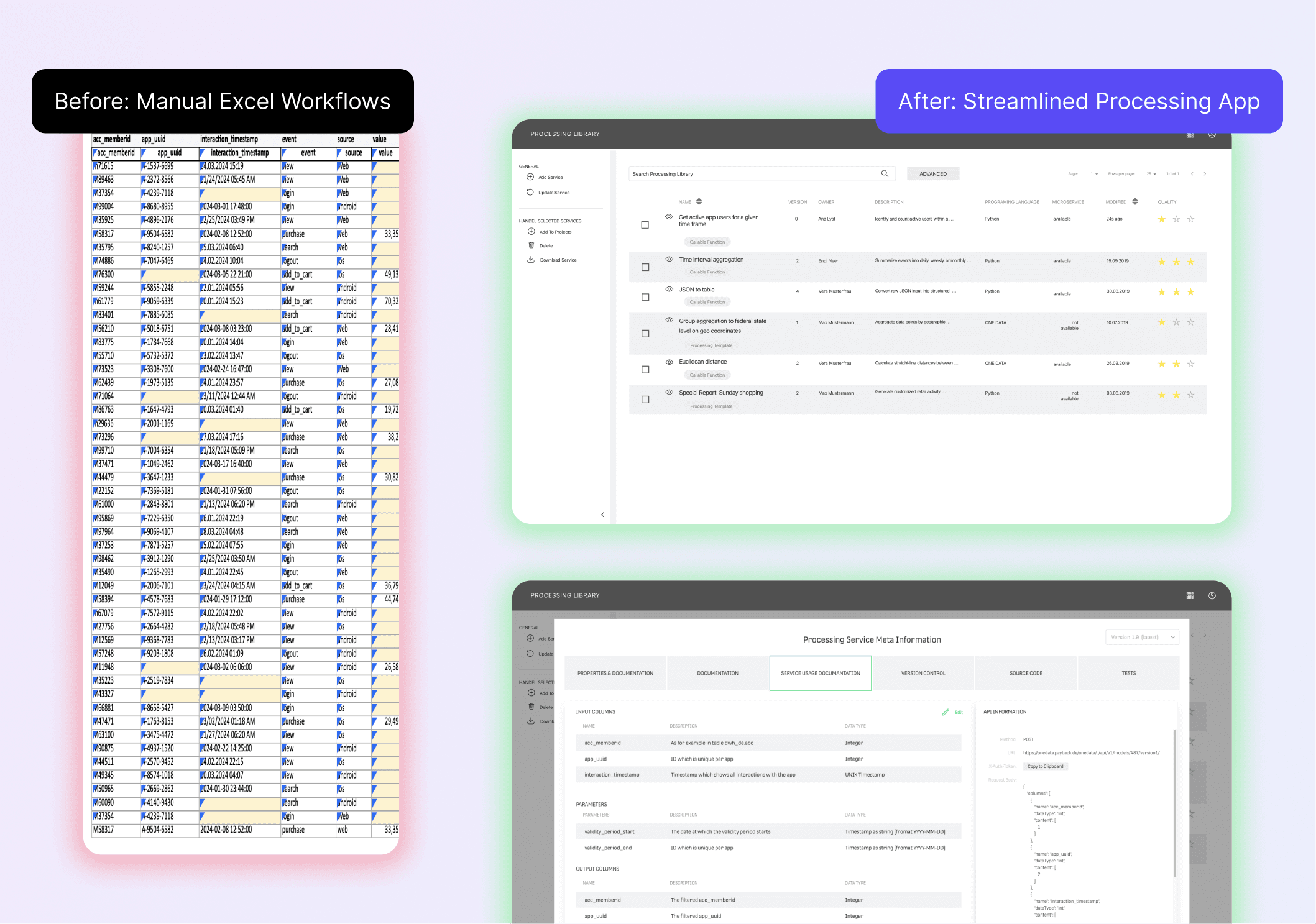
Analysts were running complex data operations in Excel. It was slow, error-prone, and impossible to maintain. Manual copy-paste, broken formulas, and version control issues were a regular part of their day.
What I designed
A processing library where analysts could build, share, and reuse custom data processors. I mapped their existing workflows to find where time was being lost, designed around those bottlenecks, and tested prototypes with analysts before anything went to development.
Results
Tasks that previously took hours were completed in minutes. Analysts stopped rebuilding the same logic repeatedly and could focus on actual analysis instead.


Collaboration
All three projects involved working closely with PMs, data scientists, and developers from day one. I could not just hand over screens and disappear — I was part of the build process through to release.
What I Learned
B2B users are domain experts. They know their process better than any designer ever will. My job was to understand how they thought and design around that mental model, not replace it with something that looked cleaner but felt foreign.
Working within the One Data platform also meant every design decision had to work within what the platform could do. That constraint forced more creative problem-solving than a blank canvas would have.
B2B users are domain experts. They know their process better than any designer ever will. My job was to understand how they thought and design around that mental model, not replace it with something that looked cleaner but felt foreign.
Working within the One Data platform also meant every design decision had to work within what the platform could do. That constraint forced more creative problem-solving than a blank canvas would have.